The Problem
Property marketplaces live or die on search: buyers filter by location, price, size, and dozens of property specific attributes, and a slow or shallow filter sends them straight to a competitor's listings. On top of search, sellers and agents wanted a faster read on what a property should list for, without waiting on a manual comps pull.
Architecture
Next.js Frontend → Express API → Drizzle ORM → PostgreSQL (Listings) · Clerk (Auth) · Google Maps (Location) · OpenAI (Valuation Assist)
What I Built
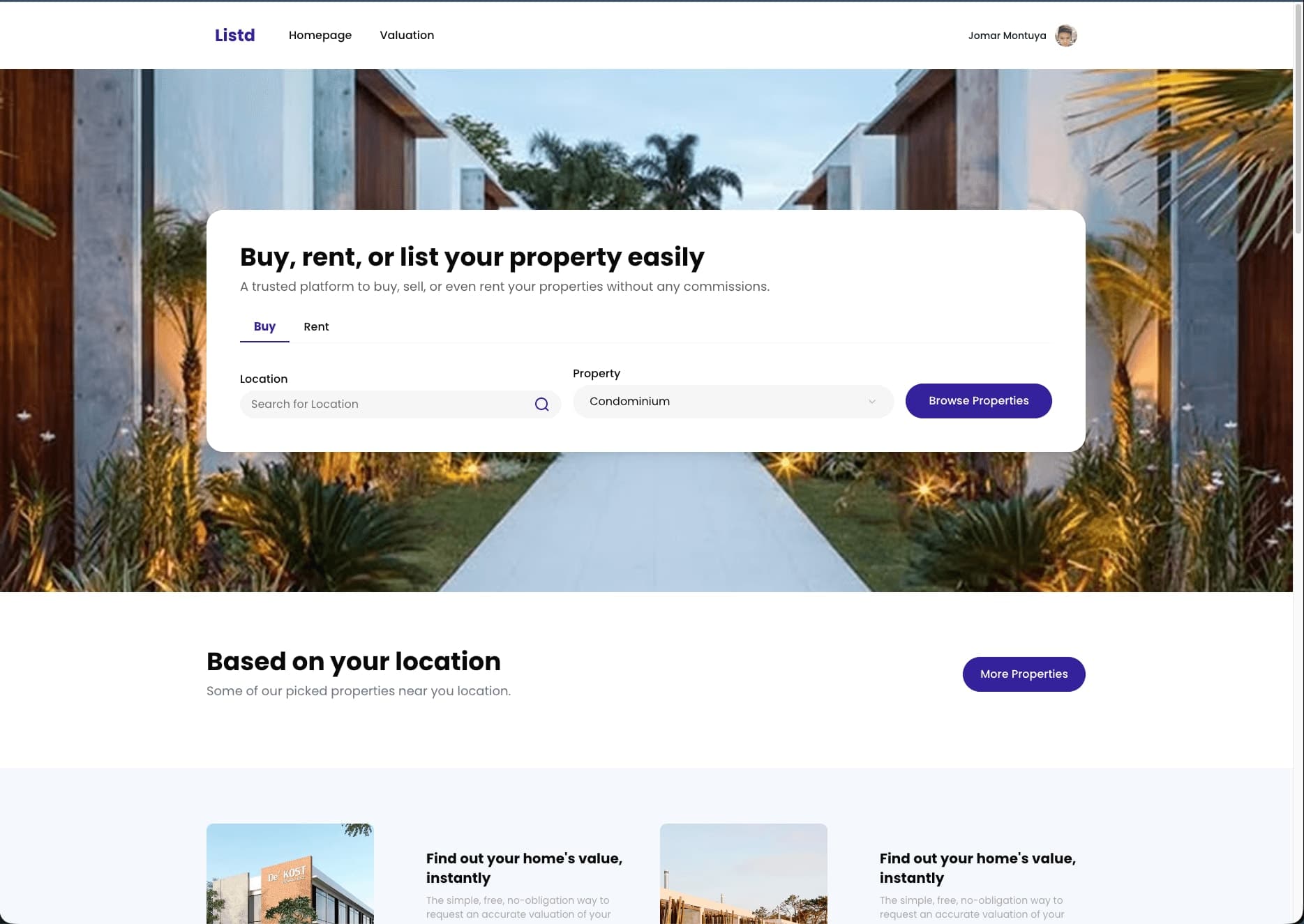
Advanced property filtering: multi attribute search (location, price band, property type, size) backed by a PostgreSQL schema designed around the query patterns buyers actually use, not a generic key value filter bolted onto the listings table.
AI assisted valuation: OpenAI integration gives sellers and agents a starting price estimate grounded in listing data, cutting the time to a first opinion without replacing human judgment on the final number.
A typed API layer, decoupled from the frontend: a separate Express service with Drizzle ORM gives the marketplace its own typed data layer, so the API and the Next.js frontend can evolve independently.
Map native listing browsing: Google Maps integration lets buyers browse by location visually instead of typing a city name into a search box.
Engineering Focus
Query performance under real filter combinations, not just the demo path. Real estate search means buyers stacking five or six filters at once: the schema and indexes had to hold up under that, not just a clean single filter query.
Why It Matters
listd.ph is a live, Philippines specific example of AI woven into an actual product feature (valuation) rather than bolted on as a side demo: the same "AI integrated into the application, not a separate add-on" pattern the Full Stack AI Engineer positioning is built on.
Screenshot