The Problem
Postmortems get written inconsistently, if at all: the incident is resolved, everyone's tired, and "we'll document it properly later" quietly never happens. The action items that came out of the retro get worse odds still: no tracker, no reminder, no owner follow up.
Architecture
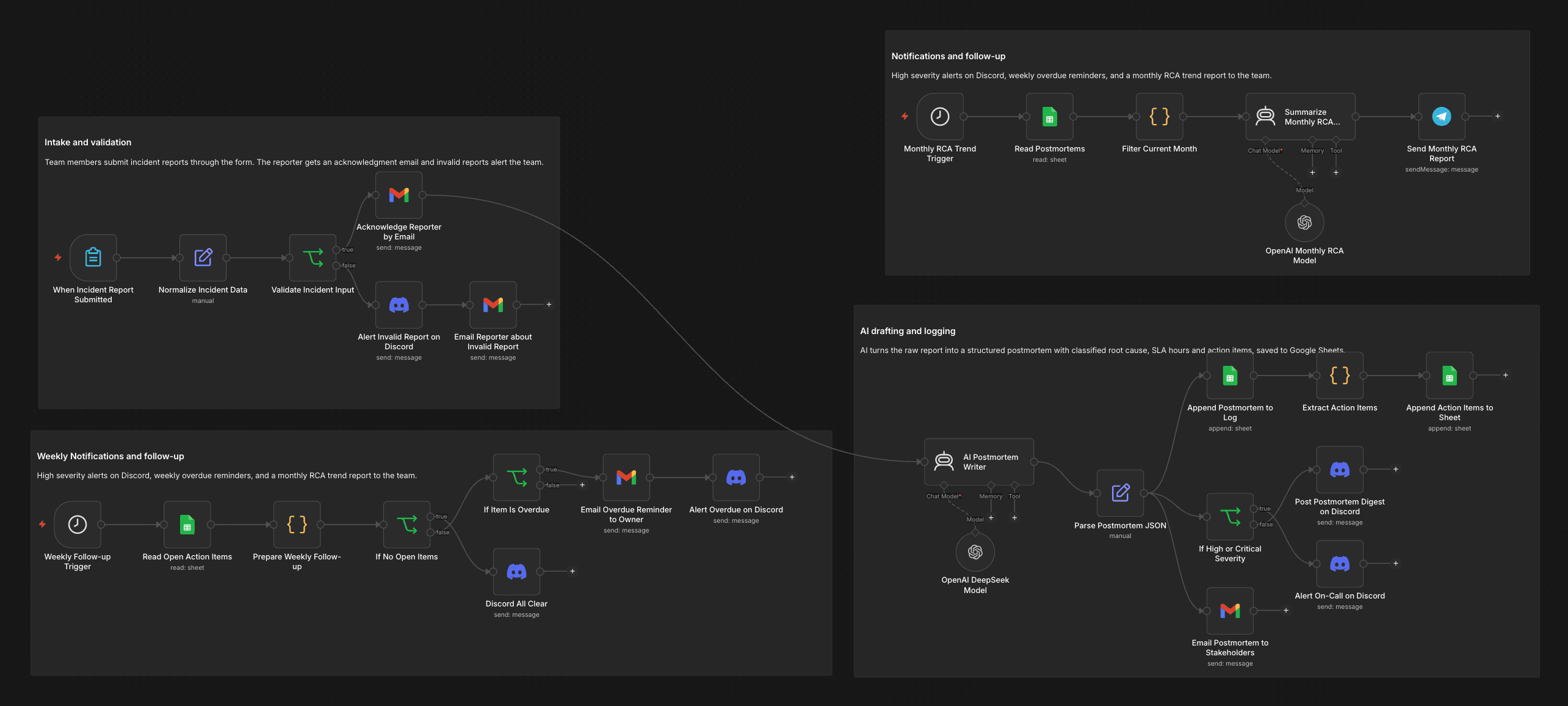
Form Submission → Validate Required Fields → [invalid: Discord alert + resubmit email] / [valid: acknowledgment email → OpenAI drafts structured postmortem (overview, timeline, root cause, impact, SLA, action items)] → Log to Sheets (Postmortems + ActionItems) → Notify (Gmail + Discord, severity escalated) → Weekly: overdue action item sweep → Monthly: RCA trend summary to Telegram
What It Does
Structured drafting, not a free text summary: the AI output is parsed as JSON with fixed fields (root cause classification, SLA hours, action items), so it lands in a spreadsheet as structured data other automation and reporting can actually query, not prose someone has to reread to extract facts from.
Validation before the AI runs: incomplete reports (missing title, summary, or severity) are rejected and bounced back to the reporter before the LLM ever sees them, so the postmortem draft is always built on a complete input.
Two independent tracking loops: postmortems and their action items are logged to separate Sheets tabs, and a weekly job rereads the action item tracker specifically to chase anything overdue: the retro's outcomes get a second, deliberate follow up pass instead of relying on the postmortem doc being reread.
A monthly feedback loop: trend analysis across the month's postmortems (root cause types, recurring services) gets summarized by AI and pushed to Telegram, turning individual incidents into a pattern signal without anyone manually collating a spreadsheet.
Engineering Focus
The valuable design choice is treating the postmortem and its action items as two different data lifecycles: one is a record, the other is a live obligation that needs its own reminder cadence. Most manual postmortem processes collapse these into one document and lose the second one.
What I'd Harden
Before relying on this for real incidents I'd want: a human sign off step before the AI drafted root cause is treated as final (LLM classified root cause is a starting point, not a verdict), idempotency on the form submission (double submits shouldn't create duplicate incident IDs), and PII review on what gets logged to Sheets given incident reports often contain customer identifying details.
Gallery