The Problem
Shopify brands run support across a dozen surfaces (email, chat, social) while the answer to most tickets ("where's my order?") lives in Shopify, not in the agent's head. Every message means tabbing between the helpdesk and the store, rereading order history, and typing the same reply again. At scale (dozens of brands, thousands of tickets a month each) that manual triage is the cost, and slow first replies are where customer trust leaks.
Architecture
Shopify (GraphQL) + Gmail (OAuth2) → Multitenant ingestion → Unified inbox → Sentiment + categorization (Vercel AI SDK) → Triage / autodraft → Agent
Customer, order, and conversation data sync per tenant into Supabase; the AI layer scores sentiment and category on ingest, so the queue is already triaged before an agent opens it.
What I Built
Multitenant support platform: architected for high email and ticket volume as merchant traffic scales, each brand isolated as its own tenant with its own connected stores and data.
AI driven ticket triage: sentiment analysis and automated categorization on inbound messages help surface urgent and negative tickets for agents to review.
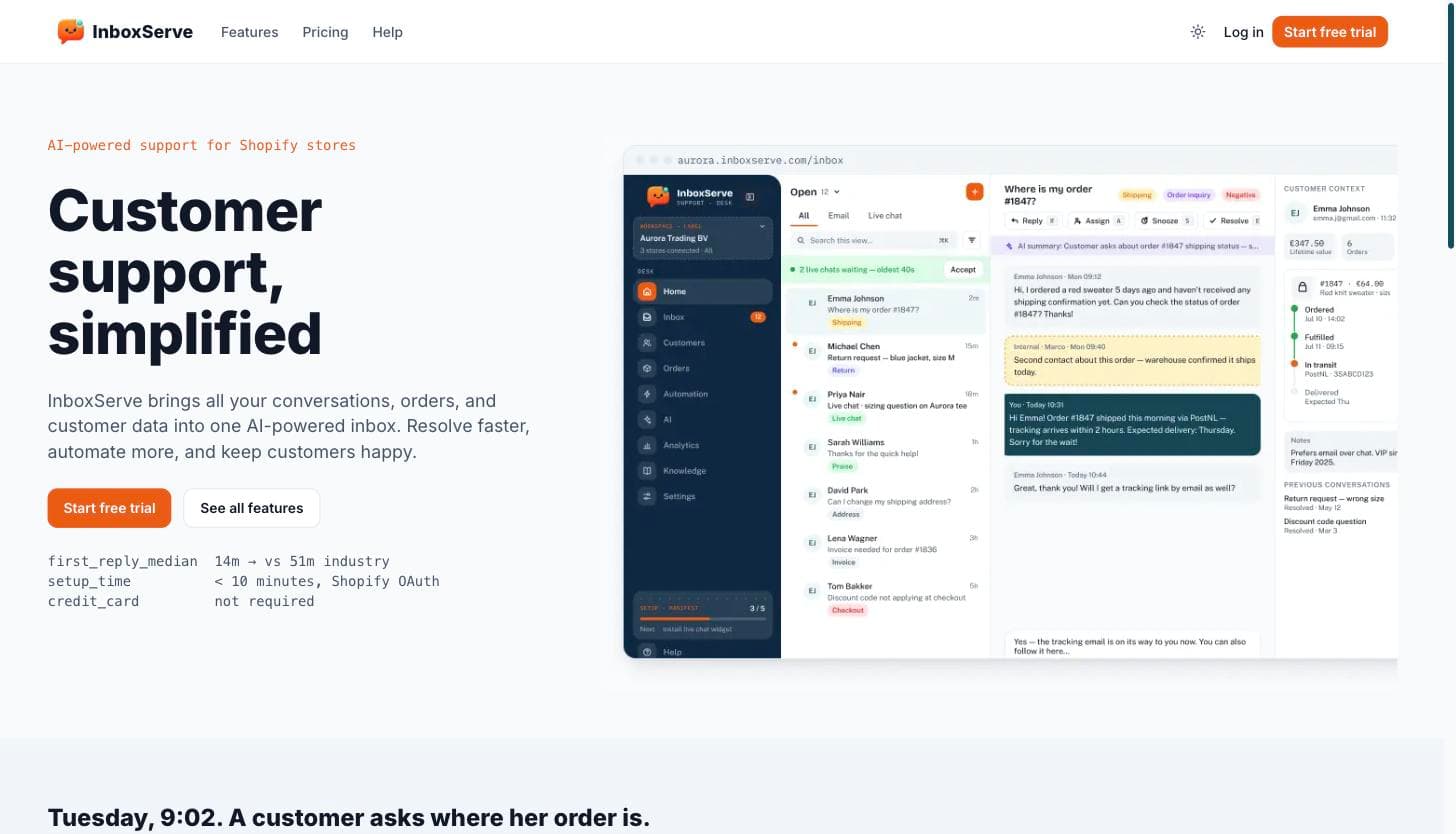
Real time Shopify + Gmail sync: Shopify GraphQL for live order and customer context, Gmail OAuth2 for email: unifying the data an agent needs into the ticket itself, so no one tab switches to answer "where's my order?"
AI inbox front end: the unified inbox UI: conversation view, customer context sidebar, and the AI summary and triage surfaces, tuned for agents working at volume.
Engineering Focus
Multitenancy and data freshness under load. The platform has to keep per brand Shopify and email data in sync in real time while staying isolated and fast as ticket volume grows, so the AI layer always triages against current order state, not a stale snapshot.
Results
- 14 minute median first reply time, measured by the client after the MVP launch.
- Setup in under 10 minutes via Shopify OAuth: no engineering required to onboard a store.
- Multitenant across many connected brands, architected for high, scaling ticket volume.
Why It Matters
In ecommerce support, reply speed matters to customers. The unified inbox and triage workflow give agents context and help them prioritize messages as the number of connected brands grows.
Screenshot