The Problem
The Build Track ran on a patchwork: Buildertrend for some things, spreadsheets and email for everything the tools couldn't do. Punchlists, bid packages, and daily updates lived in different places; the office, field crews, and subcontractors were perpetually out of sync; and the off the shelf tools couldn't bend to how this builder actually ran projects. Clients and homeowners had zero real time visibility. Every handoff between office and field was a chance for something to slip, and in construction, a dropped punchlist item is rework, delay, and lost margin.
Architecture
Multitenant Next.js app → Prisma / PostgreSQL → Role based workspaces (office / field / subcontractor) → 9 modules → Cron + Resend notifications
Every project is a tenant scoped workspace; role determines what each participant sees; a cron layer drives time based alerts through Resend.
What I Built
Multitenant project core: tenant isolated workspaces with role based access for office, field, and subcontractors, so each participant sees exactly their slice and nothing else. Multitenancy was a day one architectural decision, not a retrofit.
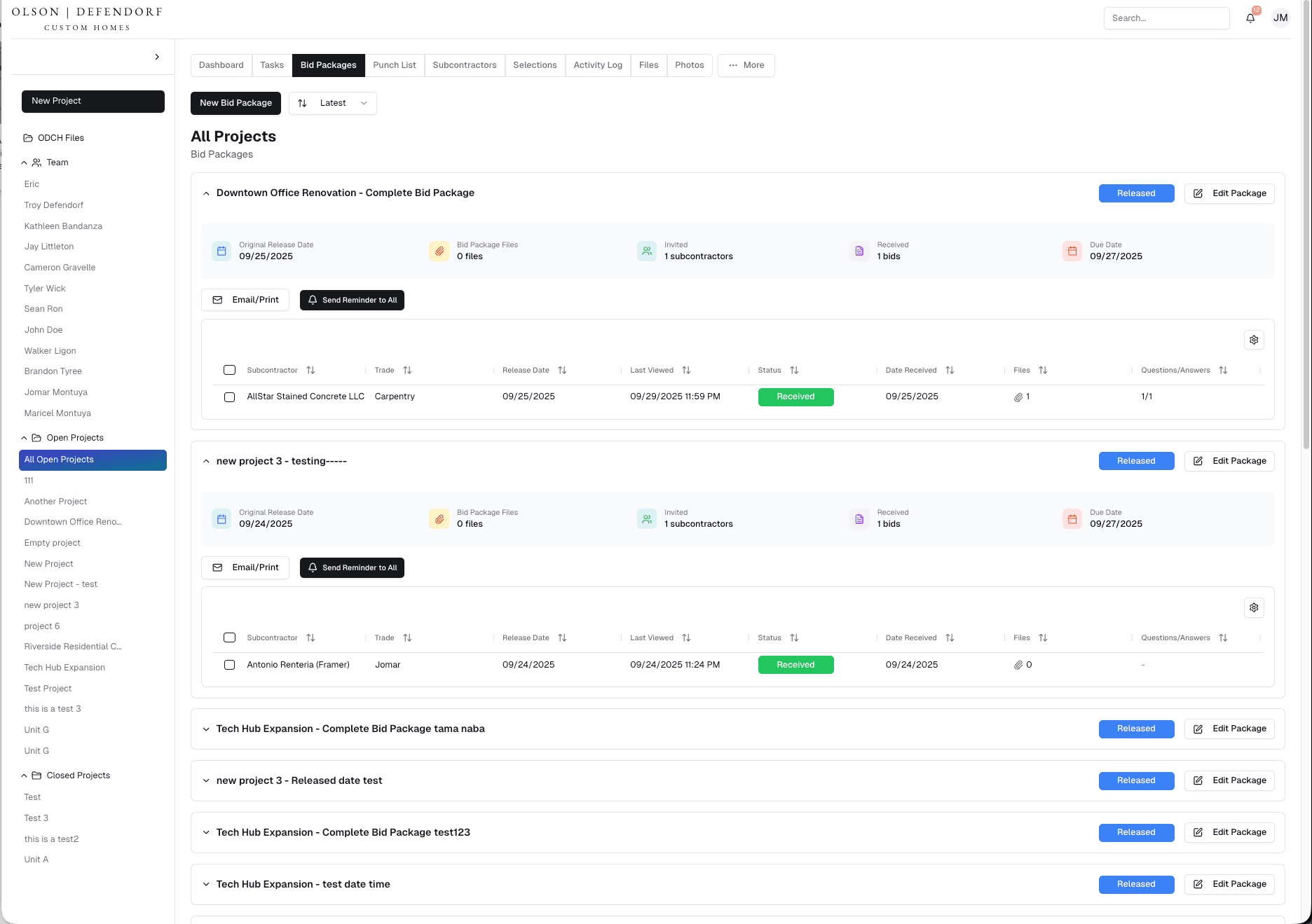
Dynamic punchlist + task tracking: assignment, queue management, and completion status in real time, replacing the spreadsheet that used to be the source of truth.
Bid package management + subcontractor directory: create, distribute, and track bid packages against a searchable directory of subs, so bidding stops living in email threads.
Project dashboard + dated activity logs: a visual overview of pending work plus an auditable, dated history of every action on a project (critical for disputes and client trust).
File and photo management: centralized field documentation, so photos and paperwork attach to the project instead of scattering across phones and inboxes.
Cron driven notifications: scheduled email alerts via Resend for tasks, updates, and milestones, so nothing depends on someone remembering to chase it.
Engineering Focus
Nine modules had to cohere into one role aware system, not nine bolted together features. The multitenant plus RBAC foundation is what makes that possible: every module reads the same tenant and role context, so adding a module doesn't multiply the permission surface. The goal was a platform a growing builder could run every project on: flexible exactly where Buildertrend was rigid.
Results
Delivery timeline is exact; operational figures are directional estimates.
- Delivered in 6 months, kickoff to full deployment, with field team onboarding.
- 3+ disconnected tools consolidated into 1 (Buildertrend + spreadsheets + email → one platform).
- 9 modules spanning the full project lifecycle in a single role aware system.
- Estimated several hours per week, per project manager, reclaimed from status chasing and rekeying across tools.
- Real time visibility for office, field, and clients where there was none: cutting the back and forth that drives rework.
Why It Matters
Fragmentation is the hidden cost in construction ops: rework, missed updates, blind clients. Consolidating punchlists, bids, subs, and logs into one real time platform (delivered in six months with field training) turns coordination overhead back into billable time.
Screenshot