The Problem
"Bus factor" risk (a component only one person understands) is usually discovered the hard way, when that person is unavailable and something breaks. It's rarely tracked continuously because computing it means correlating commit history, PR activity, and contributor stats across every repo, by hand, which nobody actually does.
Architecture
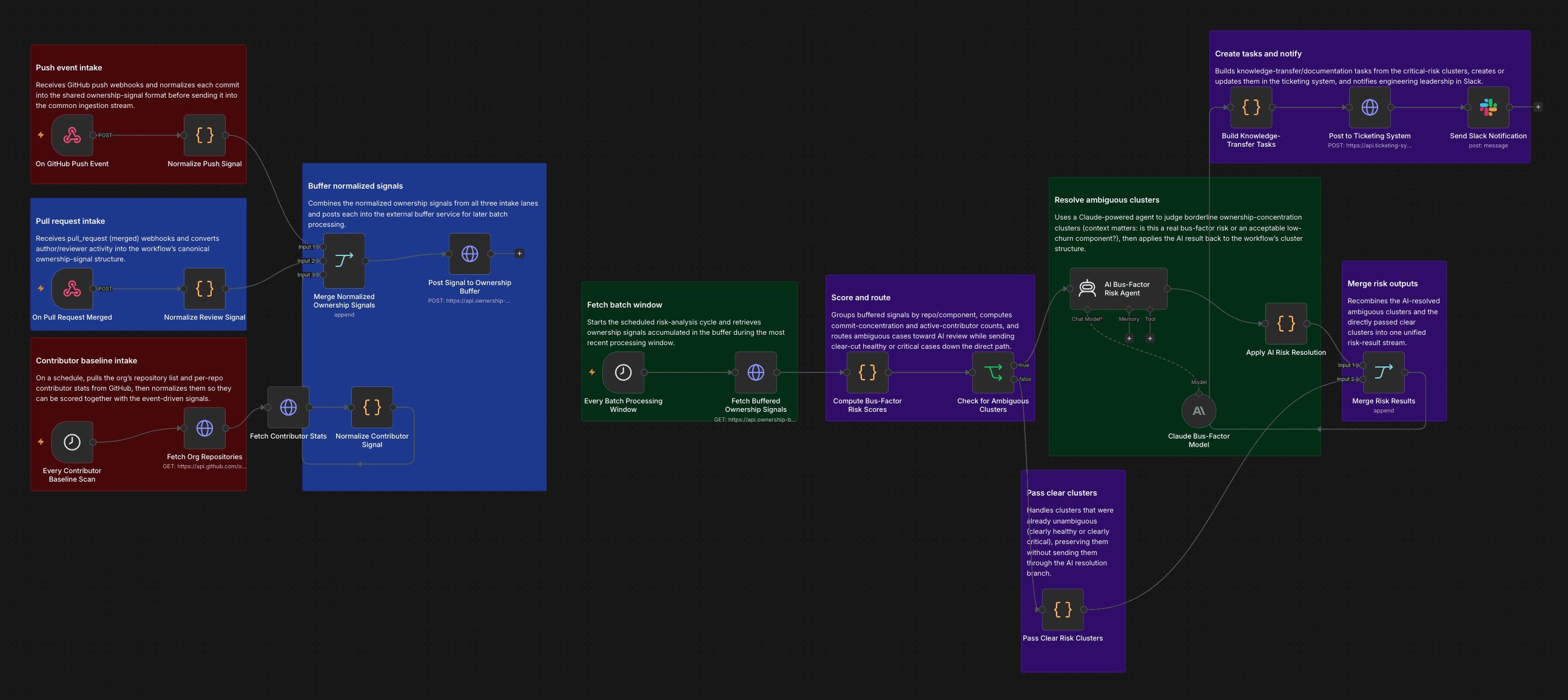
GitHub Webhooks (push, PR merged) + Scheduled Contributor Scan → Normalize to Shared Ownership Signal Format → External Buffer API → Weekly Batch: Compute Commit Concentration & Active Contributor Counts → [clear cut: route directly] / [ambiguous: Claude Agent judges risk] → Merge → Create/Update Knowledge Transfer Ticket → Slack Notification
What It Does
Event driven signal collection, batch processed scoring: push and PR events feed a shared buffer continuously, but the actual risk computation runs weekly over the accumulated window, decoupling "when we learn something happened" from "when we decide if it matters."
A three way routing split, not a single threshold: clusters are classified healthy, critical, or ambiguous; only the ambiguous middle band goes to an AI agent, so Claude is doing the judgment call that's actually hard (is this borderline case real risk or an acceptable low churn component), not rederiving conclusions a simple threshold already settled.
Automatic ticket creation on confirmed risk: critical risk clusters generate or update a knowledge transfer/documentation task via the ticketing system's API directly, turning a risk score into an actionable backlog item instead of a dashboard nobody checks.
Engineering Focus
The part that separates this from a vanity "code ownership dashboard" is the ambiguous case routing to an AI judge with actual repo/PR context: commit concentration math alone can't tell you whether a single owner file is a genuine risk or just a stable utility nobody needs to touch. That judgment call, done well, is the whole value of the workflow.
What I'd Harden
Before running this against a real org I'd want: webhook signature verification on the GitHub events (unverified webhooks are a real attack surface), a documented and versioned scoring threshold instead of a magic number in code, and a way to mark a flagged component "acceptable risk, won't fix" so the same cluster doesn't realert every week.
Gallery