The Problem
Consistent content publishing dies from two things: forgetting to check the source feed, and the time cost of turning a raw article into a designed, on brand social post. A feed poll solves the first problem; this workflow tries to solve the second one too, end to end, without a human touching a design tool.
Architecture
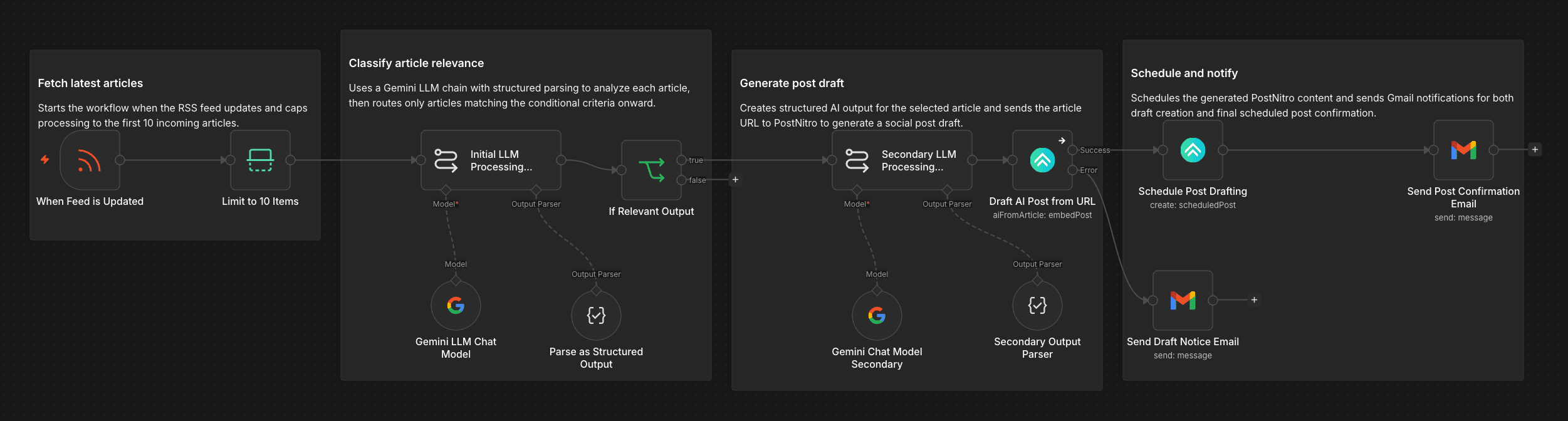
RSS Poll (every minute) → Limit to 10 Newest → Gemini Classifier (AI relevant? category, importance score) → Filter Non Relevant → Gemini Analyst (impact summary, carousel angle) → PostNitro (generate carousel, schedule LinkedIn post for next day) → Gmail Confirmation or Failure Alert
What It Does
Two separate Gemini passes, two separate jobs: a fast classifier decides relevance and importance first; only articles that pass go to a second, more expensive analysis pass that produces the actual carousel angle. Cheap filter before expensive reasoning, not one prompt doing both.
Structured scoring drives the filter, not vibes: the classifier returns a structured relevance flag and importance score, and the filter step reads that field directly: no keyword matching, no reparsing free text to decide what continues.
Design generation handed off entirely: once an article is approved, PostNitro (not this workflow) does the actual carousel design and LinkedIn scheduling; the workflow's job ends at "here's the angle and the source," which keeps content design decisions in a tool built for that.
Explicit success/failure notification: every run ends in a Gmail confirmation of what got scheduled, or a failure alert if PostNitro generation errors: no silent gaps in the publishing pipeline.
Engineering Focus
The one minute polling interval is the detail worth a second look: it's aggressive for an RSS feed and means this workflow runs constantly, which is fine for a fast moving source like breaking tech news but is the first thing I'd tune down for any less time sensitive feed to avoid needless load and API spend.
What I'd Harden
Before running this unattended I'd want: deduplication against articles already processed (RSS feeds can resurface items across polls), a manual approval gate before a post actually goes live on LinkedIn rather than fully autonomous scheduling, and rate limit backoff on the RSS poll if the source feed starts rejecting requests.
Gallery