I dropped my phone on my face while reading in bed last night.
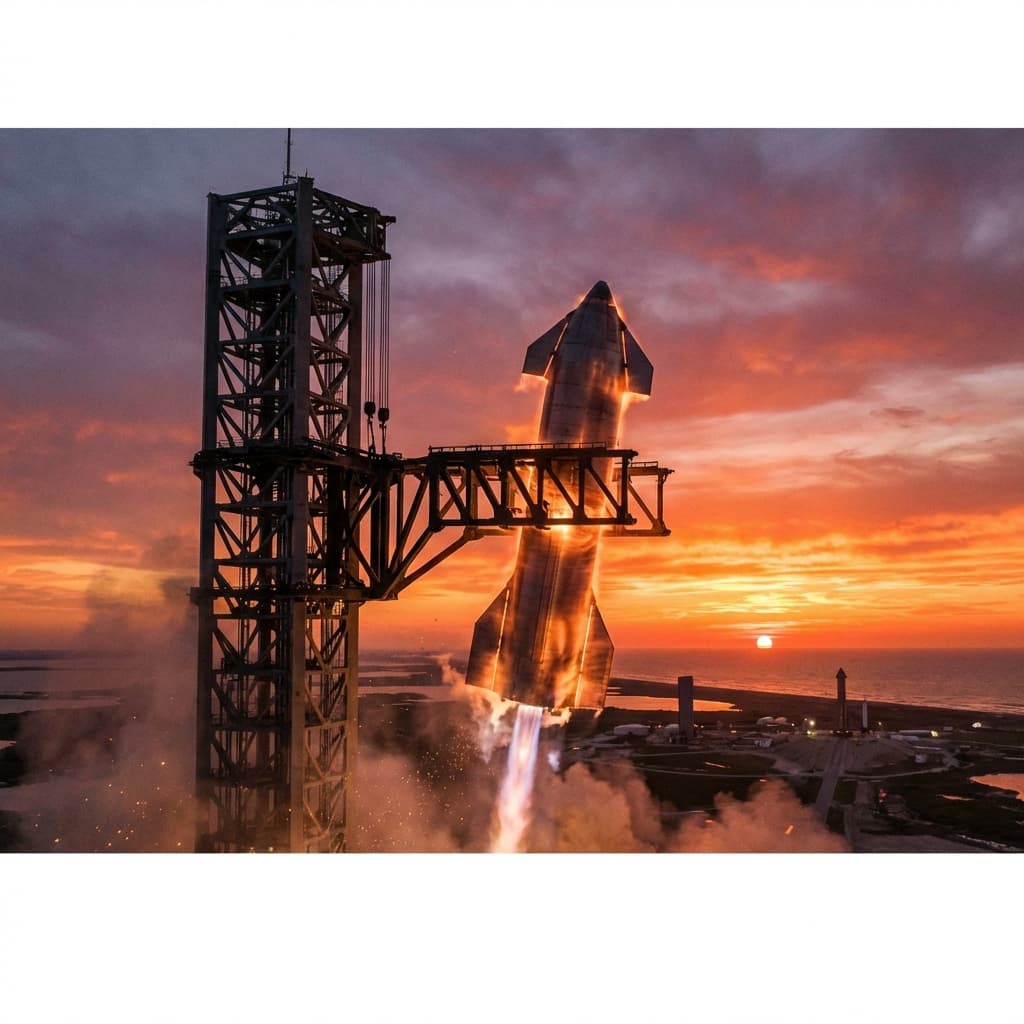
Meanwhile, SpaceX caught a falling rocket booster with giant metal chopsticks.
We are not the same.
The "Mechazilla" Moment
When I first heard the plan—"We're going to catch the booster mid-air"—I laughed. It sounded like Wile E. Coyote physics.
Then I watched it happen live.
The booster came down. The engines fired. It hovered. And those giant arms (Mechazilla) just... grabbed it.
It looked fake. It looked like CGI from a Marvel movie. But it was real physics.
Why This Matters
This isn't just a cool trick. If you land on legs (like Falcon 9), you need heavy legs. Heavy legs = less cargo. If you catch it with the tower, you delete the legs. You save weight. You can carry more Starlinks (or colonists to Mars).
It is the ultimate "delete the part" engineering philosophy.
Did you know? The first few Starships didn't get caught. They exploded. Spectacularly. SpaceX's motto is basically "Fail fast, explode often, learn immediately."
The Contrast
NASA spends 10 years building one rocket that you use once and throw in the ocean. SpaceX builds a rocket you can refill and launch again in an hour (theoretically).
It’s the difference between buying a 747 for every flight vs. just refueling the plane.
Conclusion
I have a lot of criticisms of Elon (see: my other blog posts). But you have to give credit where it's due.
The man (and his incredible team of engineers who actually do the work) caught a freaking rocket.
It makes me feel like I should be more ambitious with my own projects.
Maybe I'll finally refactor that legacy codebase. (Okay, let's not get too crazy. Landing a rocket is easier than fixing that spaghetti code.)