The year was 2016.
We were all playing Pokémon GO. We thought the iPhone 7 removing the headphone jack was the biggest tech tragedy of the decade. We were naive.
Meanwhile, in a parking lot in San Francisco, a very expensive car pulled up.
Out stepped a man in a leather jacket. (It was August in San Francisco, so the jacket was actually appropriate for once.)
It was Jensen Huang. And in his trunk was the future.
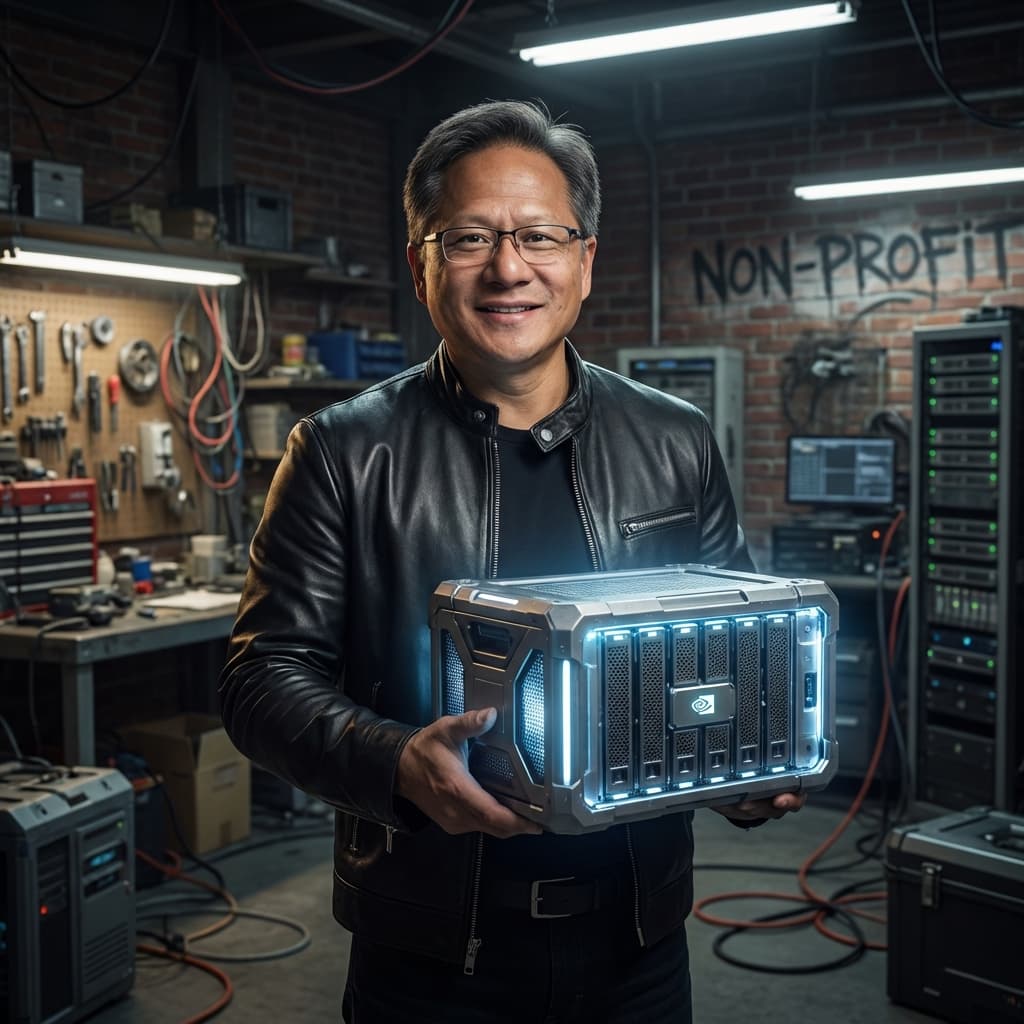
The DGX-1
He wasn't delivering a pizza. He was delivering the DGX-1.
- Cost: $129,000 (back when that bought you a house, not a JPEG of a monkey).
- R&D Cost: Billions.
- Power: 170 teraflops.
No one cared about this box. It was a niche tool for researchers.
Except for a small startup called OpenAI.
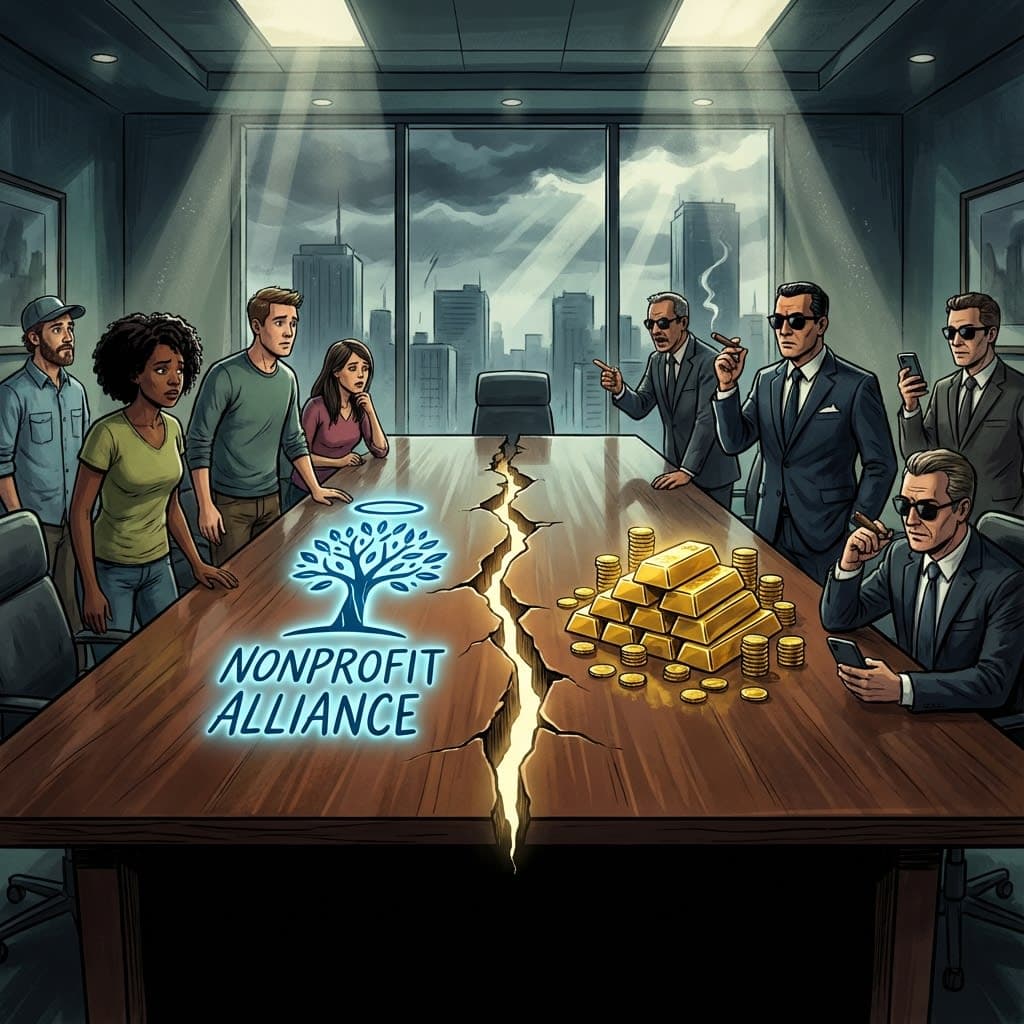
The "Non-Profit" Underdogs
The team at OpenAI was thrilled. They were the good guys! They were a non-profit! They were going to save us from the scary AI terminators by building... nice AI?
(The logic was circular, but the vibes were immaculate.)
Jensen unboxed it himself. He took a marker and signed the chassis:
"To the OpenAI team! To advance AI, computing, and humanity. Be the first!" — Jensen Huang
"To advance humanity."
Not "To advance quarterly revenue." Not "To advance closed source API subscriptions." Not "To advance a confusing corporate board structure."
Humanity.
The Twist
He put that supercomputer in the hands of Ilya Sutskever and Sam Altman.
They plugged it in. They trained models. They broke things. They fixed things.
And eventually, that lineage of compute led to GPT.
Fast Forward to Now
OpenAI is... well, complicated. Nvidia is the most valuable company on Earth. And "Non-Profit" is a term used loosely, like "Unlimited Data."
That DGX-1 is probably sitting in a museum (or a recycling center) now.
But looking back at that photo of Jensen delivering the hardware, it feels like watching a time traveler hand a caveman a lighter.
"Here," the time traveler says. "This will keep you warm."
"Thanks," says the caveman. "I'm going to use it to burn down the entire forest and sell the charcoal."
Conclusion
It's a nice story, though.
A CEO personally delivering hardware to a startup. A shared dream of advancing humanity.
It reminds us that before the billions, before the lawsuits, before the drama... it was just some nerds in a room, excited about a computer.
And honestly? I miss that energy.
(I also miss the headphone jack. Still not over it.)